

Exclusive: DAJO BIO Secures Tens of Millions of Yuan in Seed Round Financing, Bets on TCR Protein Therapeutics and Deploys Dual Tracks of Autoimmunity and Oncology

DAJO BIO
Developer of Next-Generation TCR (T Cell Receptor) Protein Therapeutics
LIPOS
Health Industry Investment Platform

Nanshan SEI Investment
Industrial Investment Institutions
VCBeat learned exclusively that Shenzhen Daja Biopharmaceutical Co., Ltd. (hereinafter referred to as "DAJO BIO") has closed a seed round financing worth tens of millions of yuan. The round was led by Dr. Li Greater Health, with co-investment from Nanshan Strategic Emerging Investment and Feibiao Innovation Seed Fund.
The proceeds will be primarily used to accelerate the iterative upgrades of three independent innovation technology platforms and AI-TCR, and to expand and refine DAJO BIO's pipeline layout in the fields of autoimmune diseases and solid tumors.
DAJO BIO, established in February 2025, is dedicated to the research and development of next-generation TCR (T-cell receptor) protein therapeutics. The company focuses on therapeutic areas such as autoimmune diseases and solid tumors, exploring the potential of TCR technology in precision immunotherapy.
Centering on key R&D links of TCR protein therapeutics, the company has built a technological system consisting of the FleXi-T Affinity Optimization Platform, Full-Scanning Safety Assessment System, and T-Lock next-generation bispecific long-acting TCR protein therapeutic platform. The system covers core workflows including TCR molecular screening, functional optimization, safety evaluation and drug development, advancing the translation of novel TCR therapeutics from R&D toward clinical stages.
TCR Protein Therapeutics: A Potential Multi-Billion Dollar Market Breaking Through the Bottlenecks of Solid Tumors and Autoimmune Diseases
1Breaking Through Antibody Target Limitations: TCRs Open Up New Frontiers for Intracellular Antigen Drug Development
Over the past decade, antibody drugs have driven rapid advancements in precision medicine for oncology and autoimmune diseases, with technologies such as monoclonal antibodies (mAbs), antibody-drug conjugates (ADCs), and bispecific antibodies continuously expanding therapeutic boundaries. However, the mechanism of action of traditional antibody drugs relies primarily on the recognition of cell surface antigens, making it difficult to directly target a large number of tumor- or autoimmune-related targets derived from intracellular proteins.
TCR technology delivers an innovative strategy to address this challenge. Unlike conventional antibody therapeutics that target antigens on the cell membrane surface, TCRs can recognize antigenic peptides presented by HLA (Human Leukocyte Antigen, also known as the human major histocompatibility complex, MHC). They precisely identify tumor and autoimmunity-related targets derived from intracellular proteins, greatly expanding the scope of druggable targets for solid tumor and autoimmune disease therapies.
From the perspective of industry development trends, TCR technology is evolving into a diverse landscape encompassing multiple technological pathways, including TCR-based protein therapeutics, TCR-T cell therapies, and TDCs (TCR-drug conjugates). As more targets and molecular formats enter clinical validation, TCR has emerged as a novel frontier in precision immunotherapy, following in the footsteps of antibody drugs.
2Commercial Loop Closed: TCR's Billion-Dollar Growth Potential Revealed by $400 Million in Sales
The TCR therapeutic landscape remains in the early stages of commercialization, yet the first approved product has already validated its commercial viability. Immunocore's flagship product, Kimmtrak (tebentafusp), has demonstrated sustained sales growth since its market launch, achieving global sales of approximately $400 million in 2025, a year-over-year increase of about 29%. The product returned to quarterly profitability in the first quarter of 2026, further underscoring the feasibility of translating TCR technology from research and development into commercial success.
Meanwhile, next-generation TCR immunotherapies targeting hotspots such as PRAME and KRAS are advancing through clinical development. As more candidate products enter pivotal clinical stages, the next 2–3 years are expected to serve as a critical window for data validation of TCR technology.
The pipeline is also undergoing rapid expansion, with a large number of candidates covering high-incidence solid tumors such as melanoma, lung cancer, liver cancer, gynecological tumors, gastrointestinal cancers, and esophageal cancer, and extending to T cell-mediated autoimmune diseases and viral diseases such as HBV/HIV. Once clinical translation is completed, the market space will be rapidly unlocked.
3Accelerating Growth in China's Blue Ocean: The Rise of Local Platforms and DAJO BIO's Differentiated Strategy
Compared with leading overseas enterprises, China's TCR protein therapeutic industry remains in its early stages of development. Currently, no TCR protein therapeutics have been approved for market launch, and related R&D efforts are primarily concentrated in the preclinical and early clinical phases. Capabilities in high-affinity TCR screening, molecular optimization, safety assessment, and clinical translation constitute both the bottlenecks and the critical links in the industrialization of TCR drugs. As overseas commercialization cases gradually provide validation, and domestic innovative pharmaceutical companies continue to strengthen their technology platforms, the TCR protein therapeutic sector is entering a phase of accelerated strategic deployment.
Against this industrial backdrop, DAJO BIO focuses on the design and development of high-affinity, long-acting specific TCR molecules, exploring differentiated innovation pathways for domestic TCR protein therapeutics.
Three Proprietary Innovation Platforms Addressing Core Challenges in TCR Drug Development
The development of TCR protein therapeutics faces three core challenges: insufficient affinity of native TCRs, high off-target safety risks, and short drug half-life requiring frequent administration. To tackle these industry pain points, DAJO BIO has established three innovative technology platforms covering the full R&D workflow and built comprehensive technological moats.
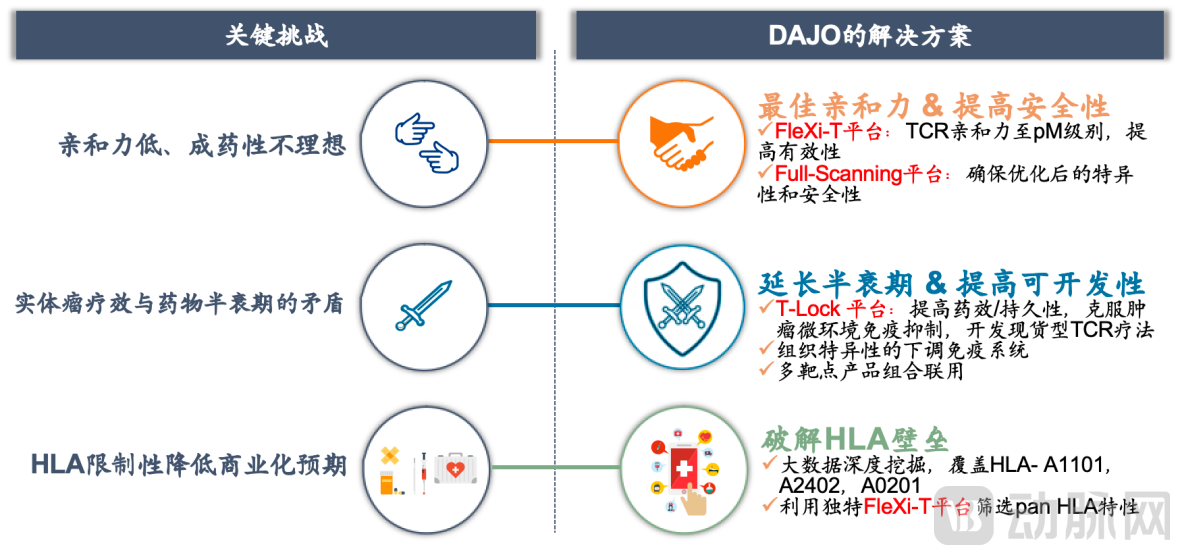
Figure 1: Current Pain Points of TCR Protein Therapeutics and DAJO BIO's Solutions
The first challenge is affinity.
The binding affinity between native TCRs and pHLA (peptide-human leukocyte antigen complexes) generally falls within the micromolar (μM) range, which renders them unsuitable for direct development into TCR protein therapeutics. Accordingly, high-affinity TCR molecular optimization constitutes a key technical link in developing TCR protein therapeutics.
DAJO BIO's FleXi-T platform leverages molecular directed evolution technology to boost TCR affinity from wild-type micromolar (μM) levels to high-affinity picomolar (pM) levels — a million-fold improvement over the native state. This core capability is mastered by only a handful of companies worldwide.
pM-level affinity signifies that the drug molecule possesses extremely high recognition sensitivity and binding strength toward the target antigen, enabling effective tumor cell killing at lower doses and addressing the issue of tumor immune escape.
The core team members have accumulated extensive experience in the development of the FleXi-T platform, having successfully completed affinity optimization for dozens of TCR molecules.
The second challenge is safety.
High-affinity TCRs that are not reasonably optimized carry a risk of cross-reactivity, which may lead to severe off-target toxicity.
DAJO BIO's Full-Scanning platform is an AI-assisted, multi-dimensional efficacy evaluation system that covers the entire workflow, including molecular analysis, cellular studies, and animal models, to systematically screen for off-target effects and potential safety risks of high-affinity TCR protein therapeutics.
This system ensures that candidate molecules undergo rigorous safety validation prior to entering the clinical phase, significantly reducing the risk of failure during clinical development.
The third challenge concerns half-life. Current TCR protein therapeutics suffer from short half-life and require frequent administration, resulting in poor patient compliance. DAJO BIO's self-developed T-Lock platform adopts innovative molecular structural design to develop a new generation of ready-to-use bispecific long-acting TCR protein therapeutics with enhanced activity.
The differentiated advantages of the T-Lock platform are reflected in two aspects: first, it prolongs drug action duration, thereby enhancing therapeutic efficacy and patient compliance; second, its molecular structure contains minimal non-human sequences, resulting in low immunogenicity and a superior safety profile. Furthermore, the platform supports the development of off-the-shelf therapeutics, overcoming the limitations associated with the personalized manufacturing of cell therapies.
For autoimmune diseases, the TCR×PD-1 agonist fusion protein designed by the T-Lock platform can inhibit T cell attacks on normal tissues; for solid tumors, the TCR×CD3 antibody fusion protein activates T cells to address tumor immune escape.
The design philosophy featuring a unified platform with bidirectional regulation opens up broader application prospects for TCR protein therapeutics.
Exploring New Directions of Autoimmunity for TCR Protein Therapeutics and Advancing Solid Tumor Pipelines Simultaneously
Unlike most industry peers whose TCR drug development programs focus on oncology, DAJO BIO further expands the application scenarios of TCR technology in the field of autoimmune diseases. Meanwhile, the Company advances its pipeline for solid tumors, exploring the extension of TCR protein therapeutics from tumor immunotherapy to precision immune modulation.
Currently, the company has established three core pipelines, including TL101 for T cell-mediated autoimmune diseases, and the TL006 and TL007 oncology pipelines targeting PRAME and other antigens.
TL101 focuses on T cell-mediated autoimmune diseases, with type 1 diabetes (T1D) as its initial indication. Type 1 diabetes is a metabolic disease mediated by autoimmune responses, whose core pathological mechanism involves autoreactive T cells attacking pancreatic beta cells, leading to gradual damage and loss of function in these cells. Current clinical treatments mainly rely on insulin replacement and some immunomodulatory approaches, while there remains a significant unmet need for therapeutic strategies that precisely identify and regulate pathogenic T cells.
TL101 specifically recognizes and inhibits pathogenic T cells via a TCR×PD-1 agonist mechanism, while preserving normal immune function. DAJO BIO has established collaborations with multiple leading hospitals, placing its pipeline among the most advanced globally.
The TL006 and TL007 pipelines target PRAME (Preferentially Expressed Antigen in Melanoma), a cancer/testis antigen (CTA) characterized by tissue-restricted expression. These programs are planned to cover multiple solid tumor indications, further enhancing the company's pipeline portfolio in the field of tumor immunotherapy.
From an overall strategic perspective, DAJO BIO has structured its portfolio around two key areas: T cell-mediated autoimmune diseases and cancer-testis antigens (CT antigens). On one hand, CT antigens exhibit tumor-specific expression and intracellular antigen presentation, which align well with the mechanism of action of TCR-based protein therapeutics. On the other hand, by pursuing differentiated target selection, the company is exploring the potential of TCR technology in solid tumors and autoimmune diseases, thereby establishing a R&D pathway distinct from conventional TCR-based cancer immunotherapies.
Led by Young Scientists: Building an Innovative Translational Team for TCR Protein Therapeutics
DAJO BIO has assembled a multidisciplinary team that combines expertise in basic research with experience in industrial translation. Its core members hail from research institutions and innovative pharmaceutical companies, with long-standing dedication to the development of TCR-based therapies, cell and gene therapy (CGT), and the industrialization of innovative drugs.
With over a decade of stable team collaboration, we have established an independent technical platform covering the entire process from TCR protein drug development to IND filing, and were selected as one of the 2026 Young Pioneer Entrepreneurial Teams in Nanshan District, Shenzhen.
Dr. Liu Qi, the company's founder and CEO, holds a Ph.D. in Medical Immunology from the University of Chinese Academy of Sciences and a bachelor's degree from the National Biomedical Base Program at the School of Pharmacy, Tongji Medical College, Huazhong University of Science and Technology. He previously served as an Associate Research Fellow at Guangzhou Laboratory of Bio-Island. As a rare leading expert in China integrating industry, academia, and research in the field of TCR immunotherapy, he possesses over ten years of core experience in the research, development, and translational application of TCR-based therapeutics.
The team encompasses key areas including protein engineering, CMC process development, clinical research, and regulatory affairs, establishing a deeply integrated system spanning R&D, industrialization, regulation, and clinical operations. Core members have participated in the development and commercialization of multiple innovative drugs, facilitating the approval and market launch of three Class 1 new drugs in China, securing IND approvals or implicit clinical trial approvals for 16 innovative drug projects, and leading more than 30 domestic and international invention patents.
The depth of talent and the stature of its platform have built an inimitable competitive moat for DAJO BIO in the TCR protein therapeutic sector. Following this round of financing, the company will comprehensively accelerate both R&D and industrialization, leveraging its first-mover advantage to aim for a position among the global leaders in the TCR protein therapeutic industry.